Publications
Publications
Selected Publications6
-
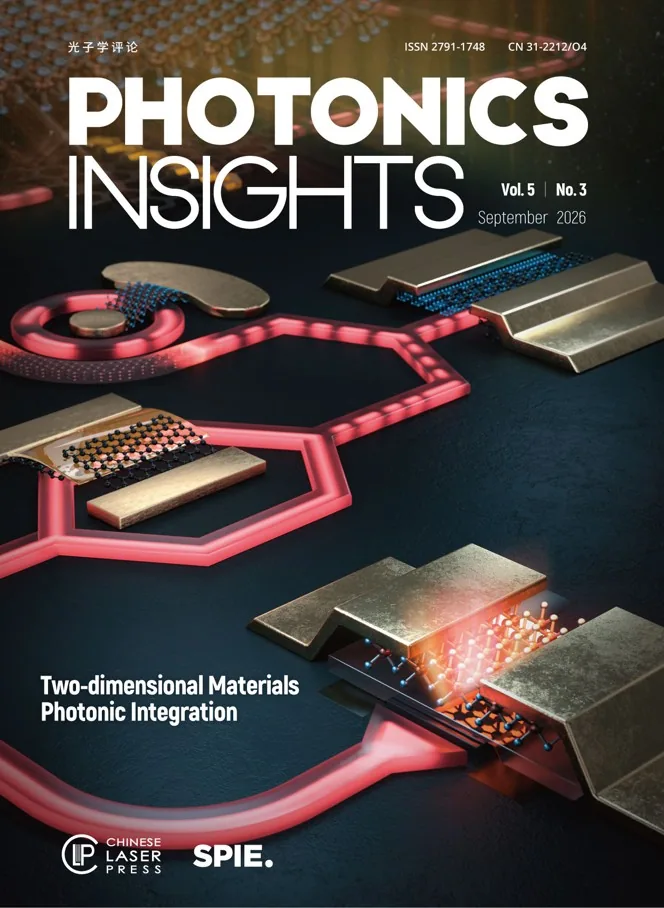
Photonics Insights · 2026
Two-dimensional materials for future photonic integration
Two-dimensional materials provide a versatile platform for future photonic integration. This review summarizes recent progress, key device opportunities, and major challenges toward next-generation integrated photonic systems.
Read paper→ -
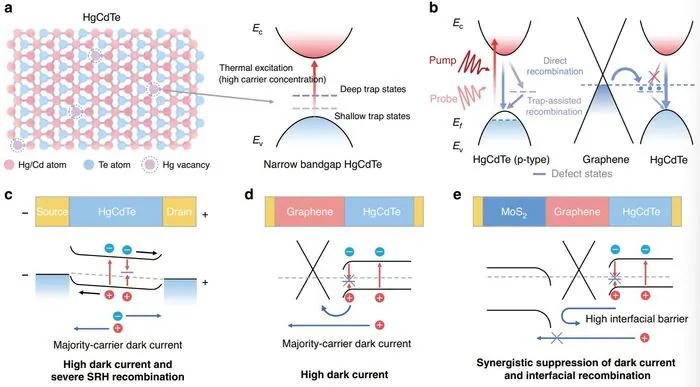
Light: Science & Applications · 2026
Van der Waals/MCT heterostructure enabled high-performance uncooled mid-infrared photodetectors via synergistic suppression of dark current and interfacial recombination
Room-temperature mid-infrared photodetection is strongly limited by excessive dark current and interfacial recombination. A MoS2/graphene/MCT van der Waals heterostructure addresses both limitations and enables high-performance uncooled detection.
Read paper→ -
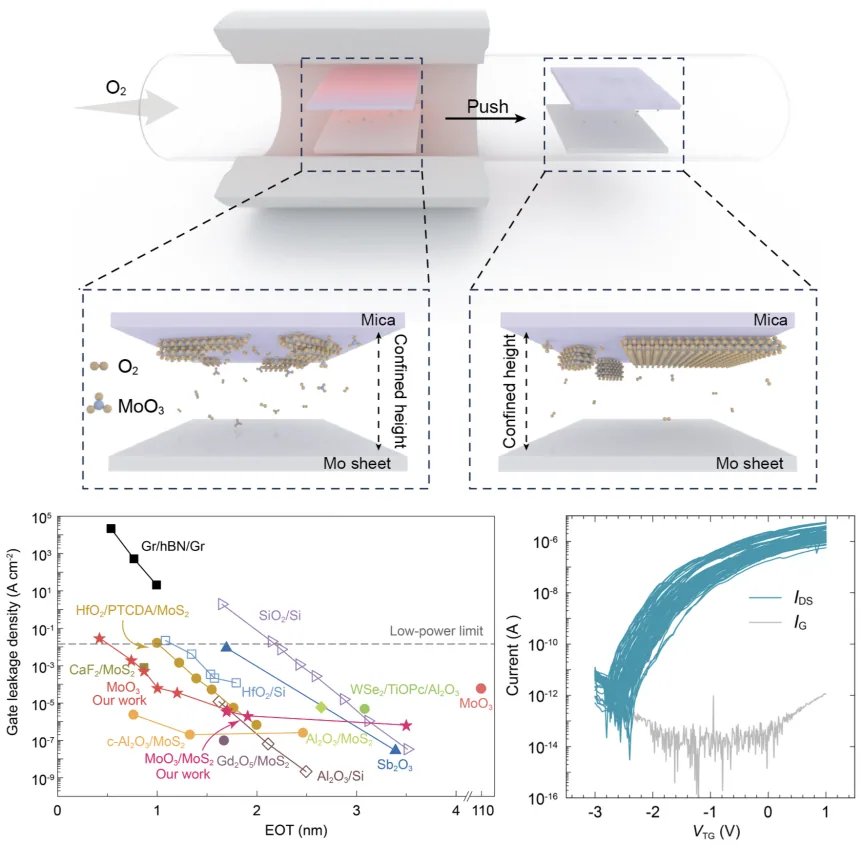
Nature Communications · 2026
Large-area two-dimensional MoO3 as a high-κ dielectric for van der Waals integration
Large-area single-crystalline MoO3 is developed as a high-κ van der Waals dielectric, enabling high-performance MoS2 transistors together with integrated circuits and low-power CMOS inverters.
Read paper→ -
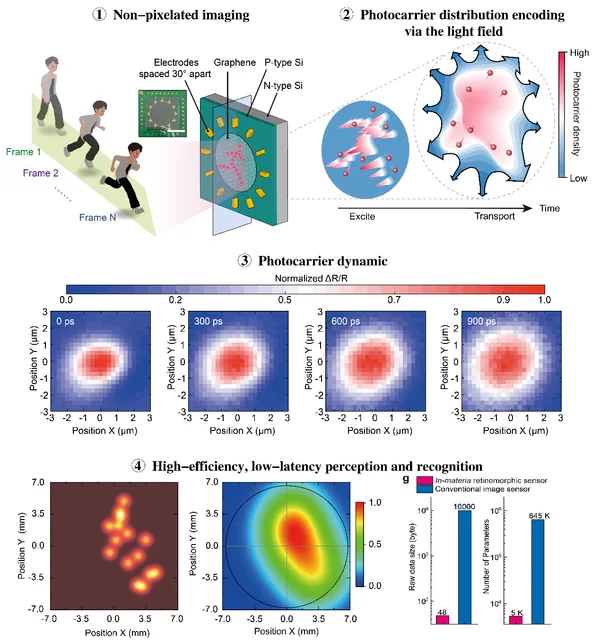
Nature Communications · 2026
Non-pixelated in-materia retinomorphic sensor via photocarrier dynamics for precise spatiotemporal perception
A non-pixelated retinomorphic sensor exploits photocarrier dynamics directly in materials to encode spatiotemporal information, providing a compact route toward precise perception without conventional pixel-array architectures.
Read paper→ -
Advanced Materials · 2026
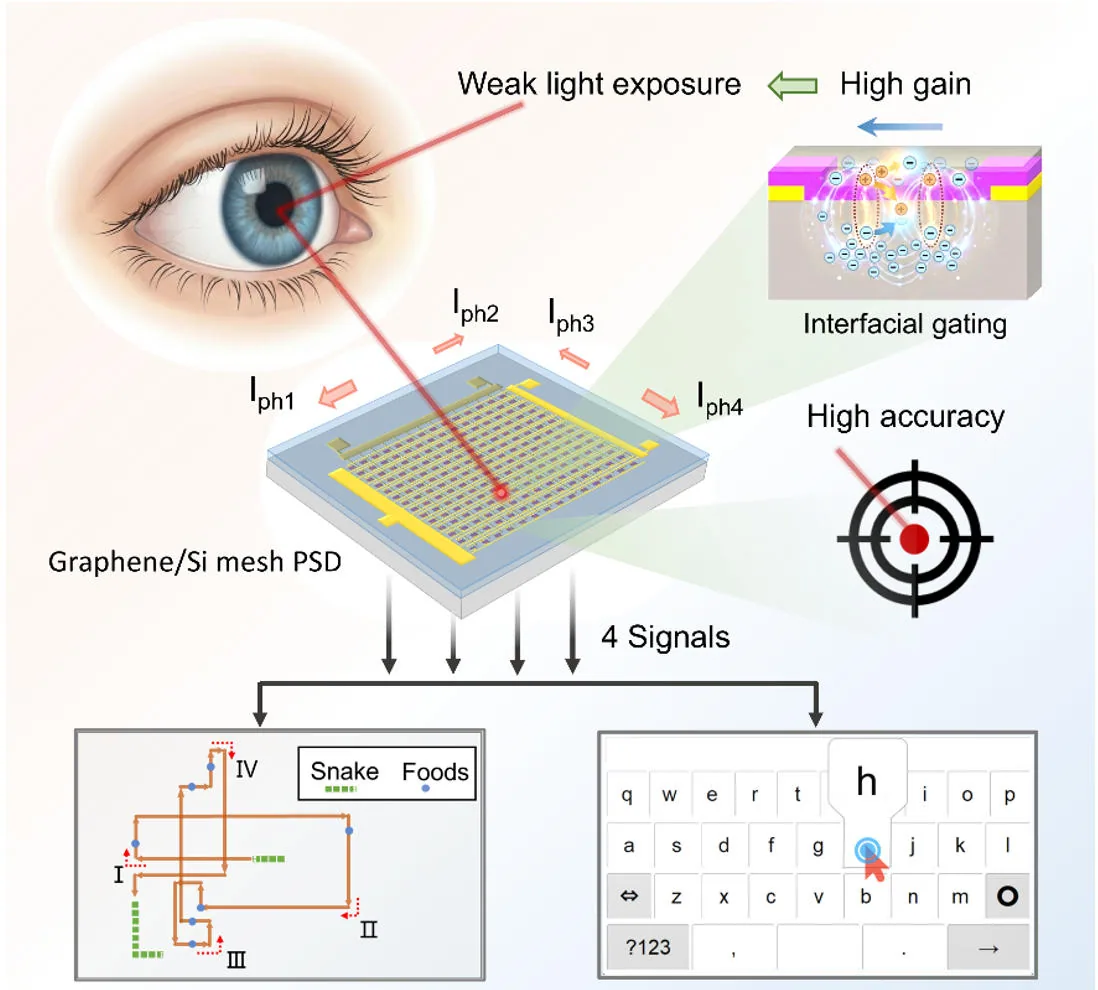
Ultrasensitive Mesh-Structured Position-Sensitive Detectors Enabling Eye Tracking for Human-Machine Interaction
An energy-efficient eye-tracking system based on a graphene photoconductive mesh position-sensitive detector operates with only four readout signals while enabling ultra-weak-light detection, high tracking speed, and high angular accuracy.
Read paper→ -
Advanced Materials · 2025
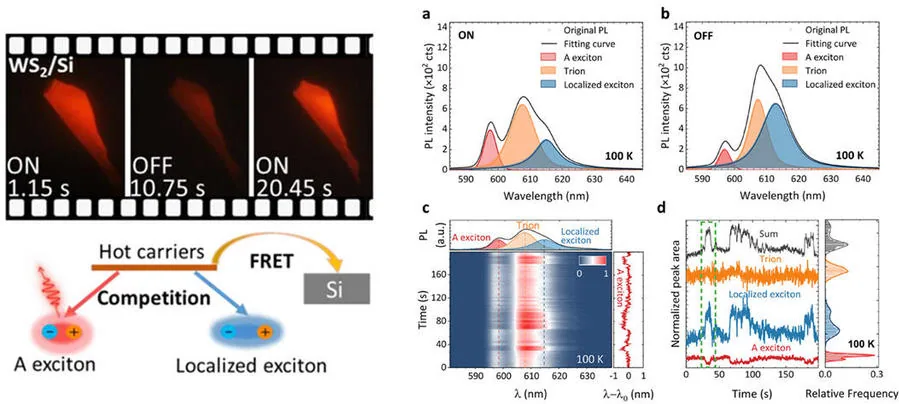
Origin of B-Type Blinking at 2D/3D Heterojunction Interfaces
B-type photoluminescence blinking is identified at a WS2/Si heterointerface and traced to competing hot-carrier relaxation pathways, with Förster resonance energy transfer modulating localized-exciton dynamics.
Read paper→
The full publication list is being migrated.